
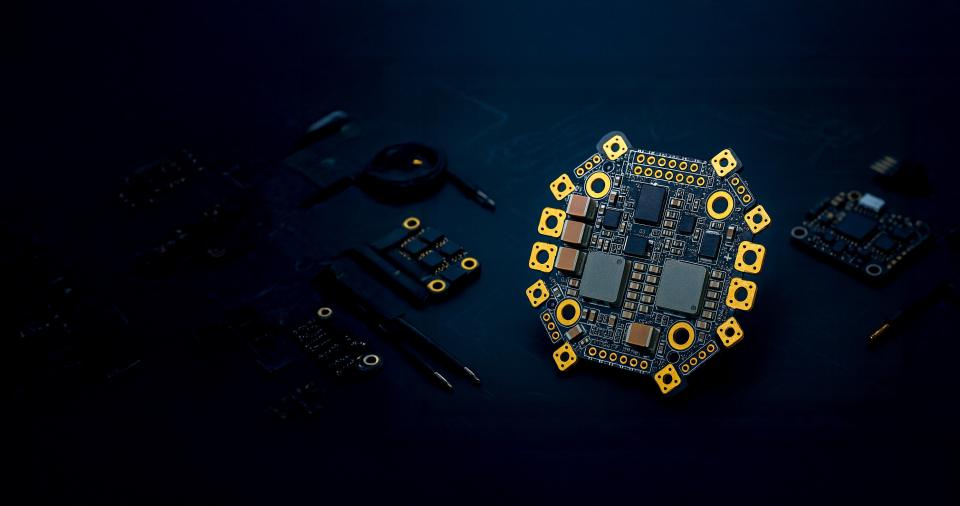
Indigenous UAV subsystems matter in the Defence UAV ecosystem because they reduce mission risk: they shorten and stabilize lead times, strengthen supply-chain security, and make fleets more serviceable in real operating conditions. For surveillance and reconnaissance platforms, these factors directly influence readiness—how many UAVs are available today, not just how capable they are on paper.
Why the Defence UAV ecosystem is different
UAV programs in the Defence UAV ecosystem are sustained systems, not one-time builds—they must operate through changing mission profiles, evolving threats, and years of maintenance cycles. In that environment, the electronics layer (power, compute, control, interfaces) often determines whether a fleet stays operational or becomes dependent on slow and uncertain replacement pipelines.
Indigenous subsystem suppliers also fit multi-vendor ecosystems because they can operate as neutral, component-focused partners serving OEMs and integrators without competing in complete UAV markets. This neutrality supports long-term collaboration, repeat orders, and predictable support across multiple programs.
Lead times decide readiness
In the Defence UAV ecosystem, lead time is not simply procurement speed—it is “time to restore capability” after failures, harsh field wear, or upgrades. A grounded UAV due to one unavailable electronic subsystem creates an outsized operational impact, especially for ISR missions where persistence and sortie generation are the real outputs.
Indigenous subsystems improve readiness by reducing reliance on imported parts and enabling more predictable replenishment for builds, upgrades, and spares. Local suppliers can also respond faster to evolving requirements, supporting iteration and adaptation to new use cases instead of waiting on external vendor roadmaps.
Supply-chain security is operational security
The Defence UAV ecosystem must assume disruption—geopolitics, export constraints, embargoes, and logistics interruptions can affect access to foreign-origin electronics when they are needed most. Local production mitigates these risks by keeping critical subsystems within a domestic supply chain, which is positioned as a national priority and supports secure, on-demand components for defence operations.
There is also a trust and assurance dimension: for defence surveillance UAVs (e.g., border patrol and reconnaissance), indigenous electronics are positioned as reducing concerns around foreign backdoors or embargo-linked interruptions while supporting sustainment without foreign dependence. This improves confidence that platforms can be maintained and supported continuously under sensitive operating requirements.
Government policy supports this direction: the Production-Linked Incentive (PLI) scheme for UAVs and UAV components was notified to promote manufacturing in India, and the incentive is applicable only on domestic value addition—encouraging reduced imports and higher capacity building/value addition. This alignment strengthens the domestic supplier base that long-term UAV sustainment depends on.
Serviceability wins long deployments
Defence UAV integrators don’t buy “parts”; they buy predictable outcomes—stable power, repeatable behaviour, and a support path that closes issues fast. Indigenous subsystems support those outcomes by focusing on mission-critical reliability while enabling strong technical support for customers deploying the components.
In practice, the biggest readiness killer is uncertainty: uncertain availability, uncertain revision changes, and uncertain turnaround when something fails. Local manufacturing and support reduces that uncertainty by making spares easier to plan and enabling tighter feedback loops between field failures and engineering fixes, including integration assistance when issues occur under real operating conditions.
For surveillance and reconnaissance missions, this becomes a measurable readiness advantage: fewer UAVs grounded due to missing electronics, faster turnaround on field faults, and long-term sustainment without foreign dependence. Just as important, platform-agnostic design reduces lock-in risk, because a vendor-agnostic supplier enables integrators to reuse subsystems across diverse UAV platforms and variants.
Strengthen fleet readiness
If you’re building or sustaining platforms in the Defence UAV ecosystem, prioritize subsystems that can be sourced reliably, supported locally, and maintained quickly at fleet scale. Choose platform-agnostic components to reduce lock-in and simplify spares, upgrades, and maintenance across multiple variants.
For teams that need faster onboarding and fewer integration surprises, use suppliers that back hardware with documentation and integration assistance, and that can support training and technical support contracts when required. This turns procurement into a sustainment plan—reducing grounded-UAV time and keeping mission capability available when it matters.